GESTAG Installation

Installation Process

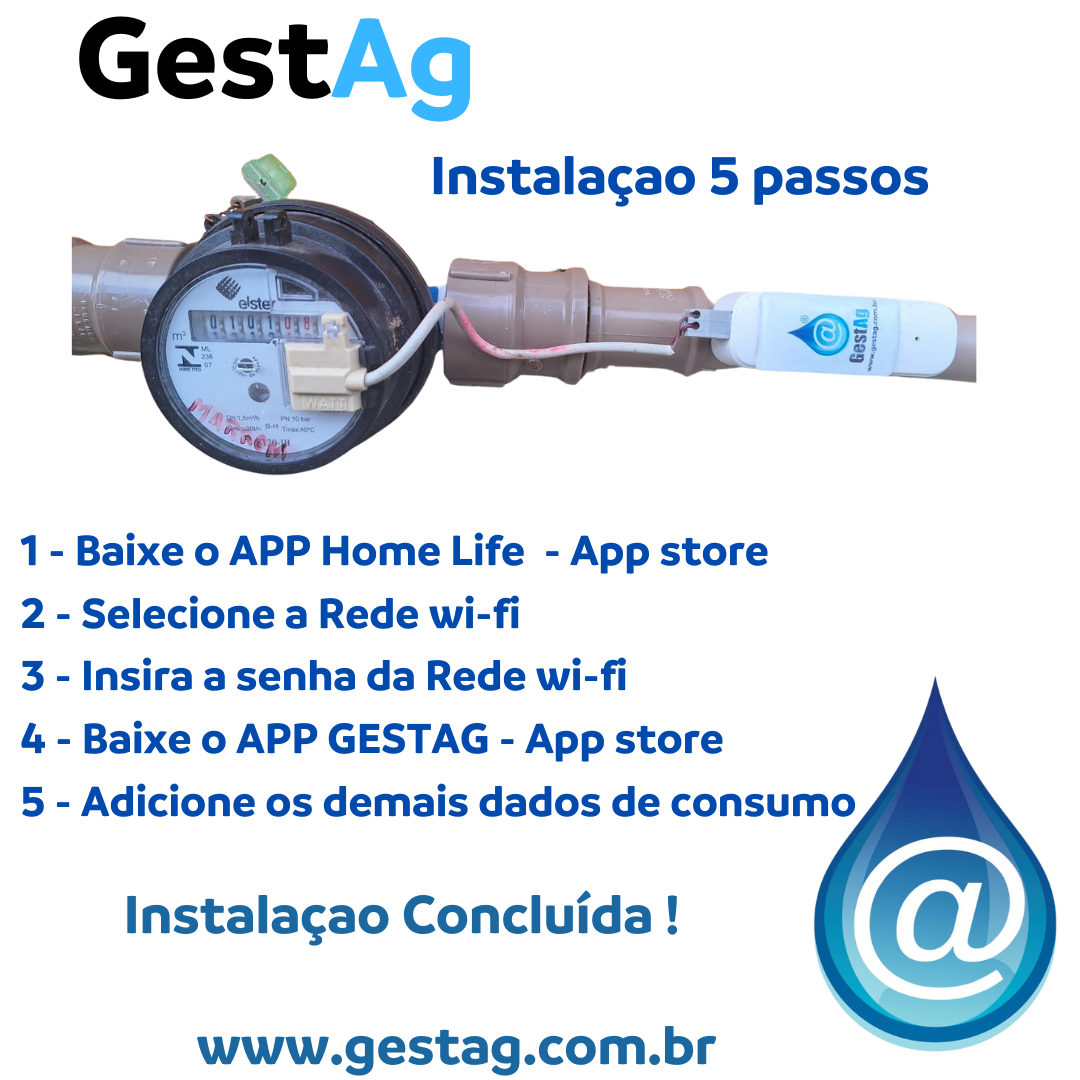
Installing GESTAG is simple and can be carried out by specialized technicians. The process involves:
  1. Site Analysis: Assessment of the hydraulic structure of the condominium or home
  2. Planning: Defining the installation points for the sensors
  3. Sensor Installation: Connection to pulsed water meters
  4. System Configuration: 3G network and parameter settings
  5. Testing: Verifying operations and data transmission
  6. Training: Guidance on using the system
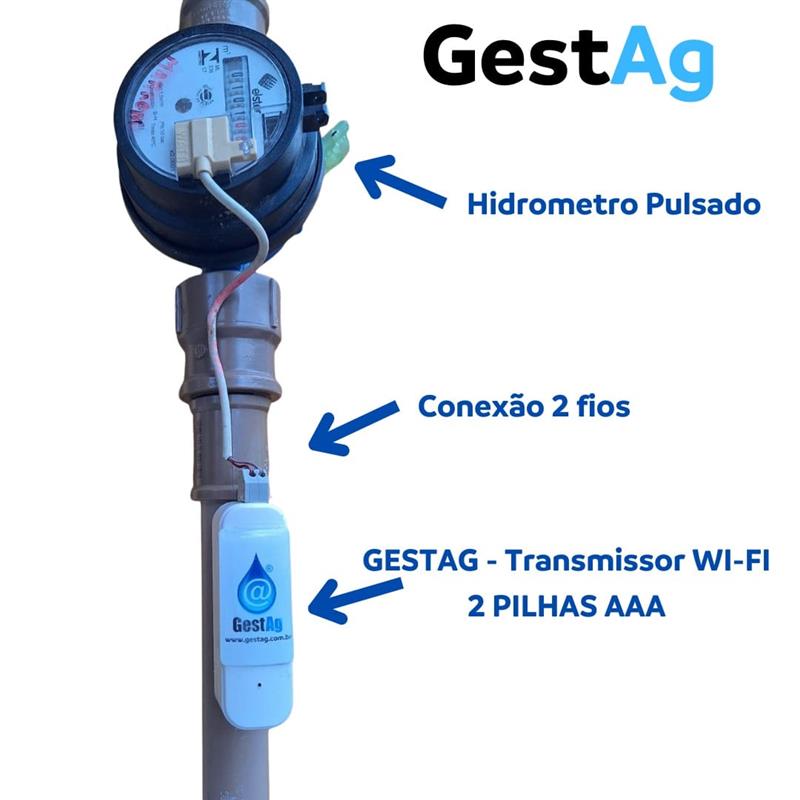
GESTAG Transmitter
GESTAG Installation

Installation Requirements

Pulsed Water Meters

Water meters with pulse output are required to connect with GESTAG.

3G Coverage

The location must have 3G network coverage for data transmission.

Electrical Access

An electrical power outlet must be near the installation points.

Types of Installation

Installation in Condominiums

For condominiums, GESTAG can be installed in different ways:
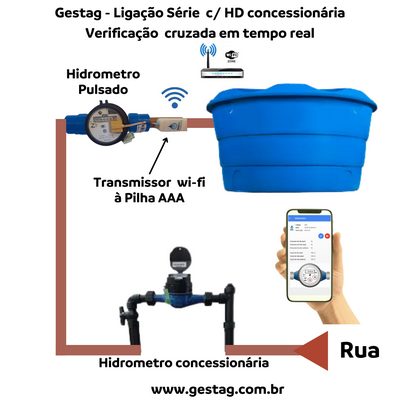
  • Series Connection: Connects all water meters on a single line
  • Individual Connection: Each apartment has its own sensor
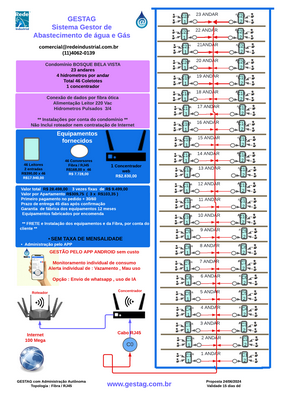
  • Connection by Floor: Grouping sensors by floors in the building
Series Connection

Series Connection

Installation by Floors

Installation by Floors

Installation & Operation

Steps, advantages, and support — with real images of the equipment.

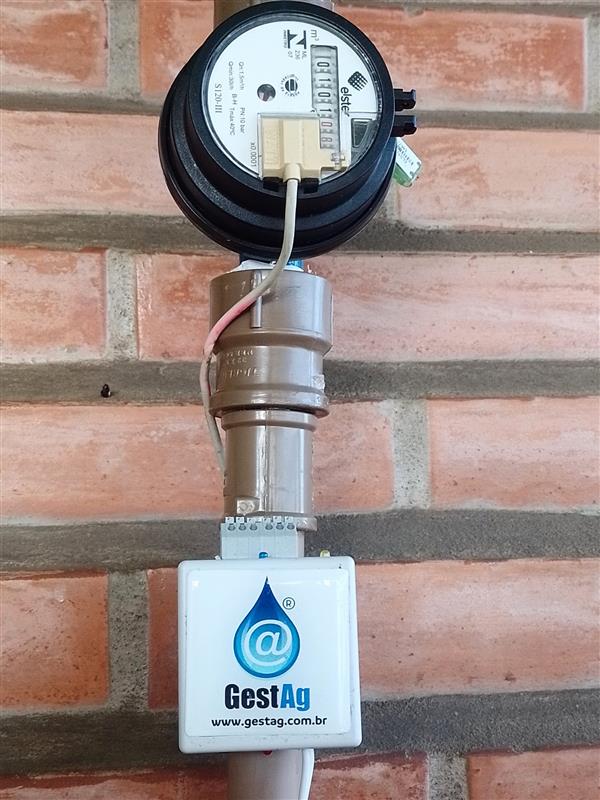
GESTAG installed on a pulsed water meter

Home Installation

For individual homes, the installation is even simpler:
  • Connects directly to the main water meter
  • Monitors total home consumption
  • Detects leaks and waste
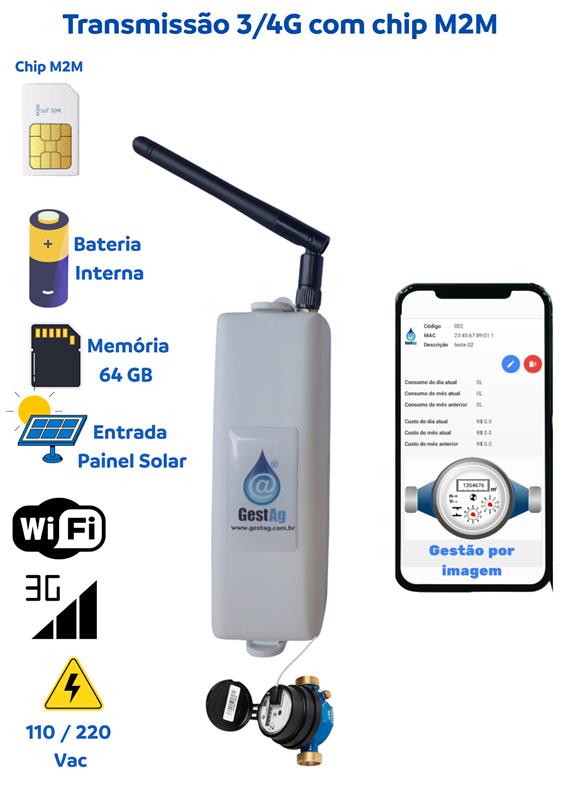
GESTAG with 3/4G transmission, M2M SIM card, and visualization app

Installation Advantages

Key practical benefits for everyday use:
  • Real-time monitoring
  • Early leak detection
  • Savings on the water bill
  • Detailed reporting
  • Remote control via smartphone
  • Non-invasive installation
  • 24/7 operation
  • Automatic alerts
  • Consumption history
  • Streamlines building management
5-step installation infographic

Technical Support

Our technical team offers:

  • Professional installation
  • System usage training
  • Specialized technical support
  • Preventive maintenance
  • Software updates

Fiber Backhaul for GESTAG

Objective: to guarantee a reliable backhaul between the GestAg modules on each floor and the concentrator (core router or switch) using fiber optics — maintaining continuous telemetry, low latency, and a securely isolated IoT network.

Architecture Scenarios

1) Ethernet-over-Fiber with Media Converters (simple and modular)

How it works: each GestAg (RJ45 port) is connected to an RJ45<->SFP media converter on the floor; the fiber goes up/down to the core switch with SFP/SFP+ bays.

  • Topology: star (recommended) or ring for redundancy.
  • Speed: 1 GbE (SFP) or 10 GbE (SFP+), as needed.
  • When to use: few points per floor, retrofit with narrow ducts, distances up to ~10 km in SM.
  • Pros: simple, modular architecture, compatible with any Ethernet GestAg.
  • Cons: each converter requires local power, as there is no PoE over fiber.
2) Edge optical switches with SFP bays (centralized management)

How it works: on each floor, an L2 switch with RJ45 ports and 1-2 SFPs is installed. The GestAg units connect via copper, and the switch uplink goes via fiber to the core.

  • Features: 802.1Q VLAN, STP/RSTP, ERPS (G.8032), QoS, port mirroring, and SNMP.
  • When to use: many GestAg units per floor, need to segment traffic (IoT VLAN, voice, data).
  • Pros: better manageability and consolidation, fewer standalone converters.
  • Cons: higher cost and complexity; ideal to have a UPS on each floor.
3) PON (GPON / XGS-PON) (high concentration of points)

How it works: an OLT in the MDF feeds optical splitters in the shaft; on each floor there is an ONU that provides RJ45 for local GestAg units.

  • Capacity: GPON ~2.5/1.25 Gbps; XGS-PON 10/10 Gbps, with shared bandwidth.
  • When to use: tall buildings with many points and few available ducts.
  • Pros: excellent capilarity and few cables to the OLT.
  • Cons: requires PON engineering (optical budget) and local power for the ONUs.
Quick comparison between architectures
Criterion Converter L2 Switch PON
Initial cost low medium high (OLT) / low per ONU
Scalability medium high very high
Manageability low high medium/high
Floor power dependency yes yes yes
Required ducts 1 fiber per floor 1 fiber per floor (or ring) 1 trunk + splitters

Components and specifications

Cables and fibers
  • Single-mode fiber (SM G.652D / G.657A1/A2): building standard, long reach, and good bending performance.
  • Multimode fiber (OM3/OM4): recommended only for short runs (≤ 300 m at 10 Gbps); in buildings, prioritize SM.
  • LSZH jacket: low smoke zero halogen jacket, ideal for indoor environments.
  • Indoor/outdoor construction: tight-buffer or breakout options for semi-exposed runs.
  • Microduct / blown fiber: solution for critical ducts, facilitating future expansions.
Connectors and terminations
  • LC/UPC: compact connector, standard on SFPs, excellent for building racks.
  • SC/APC: widely used in PON, with low optical reflection.
  • Fusion: preferred splicing method, with lowest loss.
  • Mechanical splices: alternative only for emergencies.
  • ODF / splice boxes: use one per floor and a dedicated tray in the core rack.
Transceivers (SFP / SFP+)
  • SFP 1G SM 1310 nm: typical 10-20 km links for Ethernet-over-Fiber.
  • SFP BiDi 1G: allows using a single fiber per link (distinct wavelengths for Tx/Rx).
  • SFP+ 10G SM: recommended for traffic aggregation or future installation growth.
  • ONT/ONU PON: optical modules compatible with GPON/XGS-PON OLT, usually with SC/APC connector.
Edge equipment
  • RJ45<->SFP Converters: ideal for Ethernet-over-Fiber scenarios with LFP/Link-Fault-Pass-Through features.
  • L2 Switch with SFP: support for 802.1Q VLAN, STP/RSTP, ERPS (G.8032), QoS, and SNMPv3.
  • PON ONU: terminates fiber to RJ45 on each floor and integrates the entire GestAg network.
Power and protection
  • PoE does not run over fiber: converters, switches, and ONUs need local power with a UPS.
  • Grounding: ODFs, racks, and shields must be properly grounded.
  • Physical organization: short patch cords, clear identification (floor/port/fiber), and bending radius ≥ 10x the cable diameter.
Recommended topologies
  • Star with logical redundancy: one fiber (or BiDi) per floor to the core, with LACP or RSTP for high availability.
  • Optical ring by floors (ERPS G.8032): L2 switches with SFP forming a ring and two nodes in the core; typical recovery times < 50 ms.
  • PON: OLT in the core, splitters in the shaft, and ONUs on each floor, with careful calculation of the optical budget.
L2/L3 layers and security
  • Dedicated IoT VLAN: isolates GestAg traffic and reduces unnecessary broadcast.
  • ACLs and firewall: allow only necessary MQTT/HTTPS/NTP/DNS for the dashboard.
  • DHCP and IPAM: address control of ONUs, converters, and switches.
  • Monitoring: SNMPv3/syslog for optical levels, flaps, and SFP temperature.
  • L2 Redundancy: STP/RSTP or ERPS in ring, always with controlled configuration.
  • QoS and NTP: prioritize telemetry and standardize GestAg event timestamps.
Bill of Materials (BoM) per floor

Examples of minimum sets for each architecture:

Media Converter Option

  • 1x RJ45<->SFP converter (1G);
  • 1x SFP 1G SM 1310 nm or 1 BiDi pair;
  • 1x LC-LC patch cord (or SC depending on ODF);
  • 1x shared ODF/termination box;
  • 1x compact UPS (≥ 600 VA) + 12/24 V power supply.

L2 Switch Option

  • 1x compact L2 switch (4-8xRJ45 + 1-2xSFP);
  • 1-2x SFP 1G SM or BiDi;
  • 1x UPS + dedicated power supply.

PON Option

  • 1x ONU (1-4xRJ45);
  • 1x splitter according to the fiber plan;
  • 1x SC/APC patch cord;
  • 1x UPS + local power supply.
Deployment in practical steps
  1. Duct Survey: map shafts, cable trays, and available routes.
  2. Architecture choice: define Converter, L2 Switch, or PON according to energy and number of GestAg per floor.
  3. Optical project: choose fiber type (SM G.657), connectors, ODFs, and cable slack.
  4. Pulling and splicing: perform fusions, OTDR, and power measurements (Rx/Tx within budget).
  5. Rack and ODF assembly: identify ports, fibers, and floors with clear labels.
  6. L2/L3 Configuration: IoT VLAN, DHCP, ACLs, SNMP, and redundancy protocols.
  7. Commissioning and handover: ping/loss/jitter tests, SFP reading (dBm), and "as built" delivery.

Always record initial optical levels to track potential future degradations (bends, dirty connectors, or breaks).

Video of GESTAG fiber architecture

Use this space for a video demonstrating the fiber pulling, ODF termination, connection to the GestAg on each floor, and examples of installations in real buildings.

GESTAG Deployment Flow

Intelligent water monitoring with 3G/M2M communication and web dashboards, organized into a clear deployment flow - from the diagnosis phase to project consolidation.